The Model Minority?

There were children that were scarred from war trying to start a new life in America. Many of them had a hard time learning the new language, causing them to drop out of school. Regardless, during this time Asian Americans were scoring very high above average on the math section of the Scholastic Aptitude Test. In addition, they had higher grade point averages than their peers. Asian Americans had taken many places in prestigious colleges to the point where the country’s best universities were accused of setting admission quotas to restrict the number of Asian Americans on campus.
The reasons for this academic success have been attributed to many different things. One of the reasons is that Asian American parents tend to make their children work harder because they believe education is the key to success. Another reason is the theory that they average higher I.Q. points through genetic differences. These explanations worry Asian Americans because it would only increase racial stereotyping and it has.
These events have led Time Magazine to acknowledge and publish an article on this subject of “Asian American Whiz Kids”. This sounds like a success story for the American dream but the title of “model minority” throws you in a pool where you lose individuality and are discriminated against.

We're on TV!
In 1980 the National Asian American Telecommunications Association (NAATA) was formed and was based in San Francisco. It is now known as the Center for Asian American Media (CAAM). It was formed during a historical period in Asian American media when many other organizations were being formed such as Asian CineVision in New York. The organization was found to promote Asian American media like television and filmmaking. They did this in an attempt to promote social advocacy by trying to change the negative image of Asians portrayed in mainstream media. While trying to promote social advocacy, the CAAM also opened up new opportunities for Asian Americans by having new jobs available in more media oriented work.

CAAM also holds a film festival, the San Francisco International Asian American Film Festival (SFIAAFF), every year and has since 1982 which has helped launch many Asian American independent filmmakers and has been a successful at showing Asian films. This helps open them up to new audiences and make them better known in the community. They also give out funds to other Asian American media projects that they deem to be engaging or provocative.
One program that CAAM produced was the “Silk Screen” series, which won an award, that PBS broadcasted from 1982-1987. It was supposed to educate the audience of the issues involved with Asian American imports. They continue to produce works for PBS, more so during Asian/Pacific Heritage Month.
CAAM helped put Asian Americans into mass media which made them visible to the public. They put out different videos, films, etc. to show Asian Americans in a different way than how they were portrayed by mainstream media. Asians were still being stereotyped in a negative manner and CAAM was able to help change the views of Asians by the media. This helped break through the stereotypes and show Asians in a more positive manner and helping them make their way into mainstream media. Since Asians were seen as more technological and scientific, CAAM helped by showing that Asians were also creative and are able to work in different fields. Not only did the programs break down stereotypes but just having Asians produce films showed America a different side of Asians not seen before.
 Through CAAM and the various programs it produced, it has shown the diversity of Asian cultures. It also brings out various issues in ethnic communities and makes them more public so that more people can see what is going on and try to change it.
Political Asians?
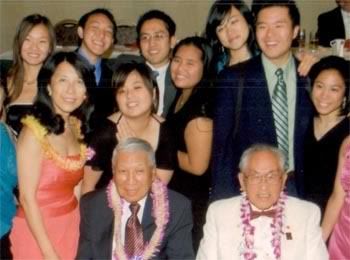 During the early 1970’s Chinese Americans had no national organization to unite their population into one voice. There was already a National Association for the Advancement of Colored People (NAACP) and the Japanese American Citizens League (JACL) but there was nothing for the Chinese American citizens. With oppression from earlier events such as the various Chinese immigration acts, it seemed about time that the Chinese Americans would step up and try to fight for their rights. This struck Kung-Lee Wang along with a group of people to found the Chinese American Leadership Council in September of 1971. This group traveled across America advocating the formation of a national organization for Chinese Americans. Their work led to the formation of the Organization of Chinese Americans (OCA) in 1973 with Kung-Lee Wang becoming the first president of OCA.
 The organization was the first and is still the only national Chinese American civil rights organization in Washington D.C. Though it started small, it has grown and now has 50 chapters across the U.S. Their goal to establish a united voice for Chinese Americans was successful and they now reach out and work for all Americans with Asian or Pacific Islander descent.
This time period was when Asians were stereotyped as more quiet, this organization rallied together to have a voice in government and try to fight for rights. They showed that Asians will also fight to have their civil rights. The organization also helped move towards having more Chinese Americans participate in government and political affairs. It was a stepping stone for more Chinese Americans to participate and led to them taking positions in politics such as March Fong Eu, secretary of state of California who served four terms and was the first Asian American woman for such a spot. Another figure was Shien Biau Woo who was elected as Delaware’s Lieutenant Governor in 1984. They integrated with American society and found themselves in positions where they could help other Asians and represent the race. The organization helped show other Americans that Asians are also capable of being active in politics as well as other areas and are not just stereotypically passive.
OCA had called for an Asian/Pacific American Heritage Week and congress passed the resolution in 1978 which was celebrated the first week of May. This solidified the Asian American presence in America as something that could not be removed and has in fact become a part of society just as much as everyone else. The heritage week has now become a heritage month and is still celebrated by Asian Americans today. Along with this OCA also fought for Asian Americans to be included in all the federal minority opportunity programs so that they could receive assistance from the government.
